

Table of Contents
- What to Expect When Buying Custom 3D Printed Miniatures
- Understanding Miniature Scale Guide for Tabletop Gaming
- Resin Miniatures for Tabletop Gaming: Material Quality and Durability
- Working with a Custom Miniature Creator: What You Need to Know
- Painting and Finishing Your 3D Printed Miniatures
- Quality Indicators That Matter When Ordering
- Conclusion
- Frequently Asked Questions
Last Updated: October 9, 2026
What to Expect When Buying Custom 3D Printed Miniatures
Custom 3D printed miniatures for sale offer tabletop gaming enthusiasts and collectors a way to acquire highly detailed, personalised figures without the constraints of mass-produced options. Borishotch Industries specialises in crafting detailed miniatures, busts, and bespoke artwork for tabletop gaming and home décor.
When you order custom 3D printed miniatures, you're not just purchasing a product. You're commissioning a piece tailored to your campaign, your aesthetic, or your collection. That's different from buying off-the-shelf alternatives, and it requires a clearer understanding of what you're actually getting.
The first thing to know: quality varies dramatically across sellers. Some deliver crisp detail and clean finishes. Others ship pieces with visible layer lines, rough textures, or dimensional inconsistencies that undermine the entire gaming experience.
The second thing: communication matters more than you'd think. A good custom miniature creator asks clarifying questions. What scale are you targeting? What's your painting skill level? Are these for display or regular tabletop use? The answers change what they should deliver.
Understanding Miniature Scale Guide for Tabletop Gaming
Miniature scale is the ratio between the figure's height and what it represents in the game world. For tabletop gaming, scale determines whether your piece fits with your existing collection and whether the detail level makes sense for gameplay.
The most common scales in tabletop gaming are 28mm and 32mm, measured from the bottom of the base to the top of the head. These aren't interchangeable; a 28mm figure looks noticeably smaller next to a 32mm piece.
Here's what you need to know about matching scales:
| Scale | Typical Use | Detail Level | Best For |
|---|---|---|---|
| 15mm | Skirmish games | Moderate | Budget-conscious collectors |
| 28mm | Fantasy gaming | High | Standard D&D campaigns |
| 32mm | Premium gaming | Very high | Display and detailed painting |
| 54mm | Display pieces | Extreme | Showcase and exhibition |
Borishotch Industries offers 32mm miniatures, which means they integrate seamlessly with most premium tabletop gaming collections. This scale allows for intricate detail work, facial features, weapon engravings, and cloth textures.
The practical implication: if you're mixing figures from different sellers, verify the scale before ordering. A 32mm character looks oversized next to a 28mm monster, and that breaks immersion instantly.
Resin Miniatures for Tabletop Gaming: Material Quality and Durability
Resin miniatures for tabletop gaming dominate the custom market because the material offers something plastic injection-moulding cannot: fine detail reproduction and minimal material waste during production. When you order a custom piece, resin is almost certainly what you're getting.
Resin comes in different formulations. Standard resin produces sharp details but can be brittle; a dropped figure might snap at the ankle or lose a weapon arm. Higher-grade resins add flexibility and impact resistance, making pieces more durable for regular tabletop use.
The finish quality depends on post-production handling. A well-finished resin miniature comes with minimal surface imperfections. A poorly finished one arrives rough, with visible support marks, minor pits, or uneven texture.
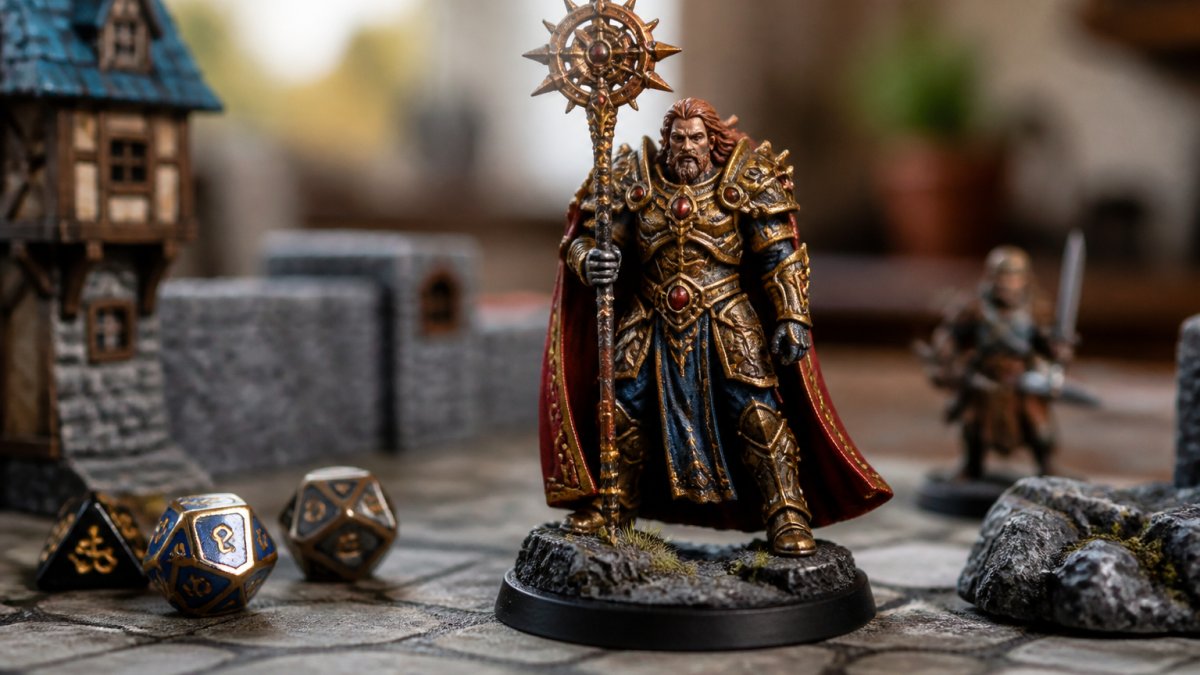
When evaluating resin quality, ask these questions: Does the seller hand-finish each piece or rely on automated post-processing? Do they cure the resin fully before shipping, or do they rush orders?
Our pieces at Borishotch Industries are finished to a standard where they're paintable straight from the box. No sanding required. No surprise imperfections emerging mid-brush stroke.
Working with a Custom Miniature Creator: What You Need to Know
The relationship between you and your custom miniature creator determines whether you get what you imagined or something that misses the mark entirely. This is transactional on the surface, but it's actually collaborative.
Start with a clear brief. Don't assume the creator knows your vision. Describe the character or creature in detail: race, class, equipment, pose, any distinctive features. If you have reference images, artwork, or photographs, include them. The more specific you are, the less back-and-forth you'll need.
Expect a lead time. Custom work isn't instant. Most creators quote 2-4 weeks for standard orders, longer for complex pieces. If you've got a campaign starting in three weeks, order now and communicate that deadline upfront.
Painting and Finishing Your 3D Printed Miniatures
Your 3D printed miniature arrives unpainted. This is actually an advantage; you control the final aesthetic entirely. But it also means you need a plan.
Start with priming. A thin coat of primer (grey, black, or white depending on your colour scheme) creates a surface that accepts paint evenly. Skip this step and your paint will bead up and chip easily. This is non-negotiable.
Dungeons & Dragons Female Gnome Artificer with Iron Defender Mount Miniature →
Thin your paints. This is the most common beginner mistake. Paint straight from the pot is too thick. It obscures detail and looks plasticky. Add water until the consistency resembles milk, not cream. Multiple thin coats beat one thick coat every time.
Paint in layers. Start with base colours, then add shading (darker tones in recesses), then highlights (lighter tones on raised surfaces). This three-step approach creates depth and makes even simple colour schemes look professional.
For resin miniatures specifically, acrylic paints work best. They adhere well to cured resin and dry quickly. Avoid oils unless you're experienced; they require solvents and take days to cure.
| Step | Time | Key Point |
|---|---|---|
| Priming | 30 minutes | Use thin, even coats |
| Base coating | 1-2 hours | Cover all surfaces |
| Shading | 1-2 hours | Focus on recesses |
| Highlighting | 2-3 hours | Build depth gradually |
| Varnishing | 30 minutes | Protects finished work |
A finished miniature should have a matt or satin varnish coat to protect the paint from chipping during gameplay. Gloss varnish looks too shiny for most gaming pieces.
Quality Indicators That Matter When Ordering
You can't see a piece in person before ordering, so you need to evaluate sellers based on what they show you. These indicators separate professionals from amateurs.
Look at their portfolio. A serious creator maintains detailed images of past work, showing multiple angles and lighting conditions.
Check their communication responsiveness. Do they answer questions clearly and quickly? Do they ask clarifying questions about your order? A creator who's just taking your money won't invest in understanding your needs. One who cares will.
Read reviews carefully. Look for specific feedback about quality, not just star ratings. "Great seller" tells you nothing. "Arrived with clean detail and minimal support marks" tells you everything. Look for patterns; if multiple reviews mention layer lines or rough surfaces, that's a signal.
Ask about their quality control process. Do they inspect every piece before shipping? Do they have a returns or replacement policy if something arrives damaged?
Borishotch Industries maintains a straightforward approach here: we respond to customer questions within 24 hours, and we replace any piece that arrives damaged. Our Dungeons & Dragons miniatures, like the Dungeons & Dragons Female Gnome Artificer with Iron Defender Mount Miniature at £4.00, come finished and ready to paint.

Conclusion
Buying custom 3D printed miniatures for sale requires more attention than grabbing a mass-produced option, but the payoff is worth it. You get pieces tailored to your campaign, your aesthetic, and your gaming table. You avoid the generic feeling of off-the-shelf figures.
The key is choosing a creator who understands that detail matters, not just in the sculpting, but in communication, finishing quality, and standing behind their work. Borishotch Industries specialises in detailed D&D miniatures in 32mm resin that arrive ready to paint, with responsive customer support and bulk discounts on orders over £50. Whether you're expanding your character collection, you'll find pieces that integrate seamlessly with your existing gaming setup.

Frequently Asked Questions
Where can I buy custom 3D printed miniatures?
You can purchase custom 3D printed miniatures directly from specialist retailers who offer ready-made designs or commission bespoke pieces. Borishotch Industries stocks a curated selection of detailed tabletop miniatures, including Dungeons & Dragons characters like the Female Gnome Artificer with Iron Defender Mount (£4.00) and Human Artificer variants. Browse their full range to find specific character classes, races, and themes that fit your campaign needs.
How do I choose the right scale for a D&D miniature?
Standard tabletop miniatures are typically 28mm to 32mm scale, which aligns with most D&D battle maps where one square equals 5 feet. The 32mm scale used across Borishotch Industries' range ensures compatibility with standard gaming grids and terrain. Verify your existing miniatures' scale before ordering to maintain visual consistency at the table. Larger or smaller scales can disrupt tactical gameplay and visual balance.
Are 3D printed miniatures suitable for painting?
Yes, resin miniatures are excellent for painting. Resin surfaces hold paint well when properly primed, giving you the same finish quality as traditionally cast metal or plastic miniatures. The detailed sculpting on 3D printed pieces, such as the intricate gear work on the Female Gnome Artificer's Iron Defender, provides excellent surfaces for fine brushwork and layering. Prepare the surface with a primer designed for resin to ensure paint adhesion.
What is the difference between a custom miniature creator and a print-on-demand service?
A custom miniature creator designs and produces unique pieces tailored to your specifications, often from scratch or with significant modifications. Print-on-demand services typically offer existing designs you can order without alteration. Borishotch Industries works with established designer models (like those from MZ4250) that capture Monster Manual accuracy while allowing you to select from their curated range.
Can I order a miniature from my own character design?
Many 3D printing services accept custom designs, though turnaround times and costs vary significantly. If you have a specific character concept not available in standard ranges, contact retailers directly about commissioning options. Borishotch Industries specialises in established tabletop gaming designs with commercial licensing, ensuring quality and compatibility.
Looking for miniatures that actually match your campaign vision? Browse our full selection of 3D printed gaming figures and place your order with Borishotch Industries. Free postage on UK orders over £50, and automatic discounts on bulk purchases.