

Table of Contents
- What Makes Quality D&D Miniatures Worth Your Investment
- Understanding D&D Miniature Scale and Compatibility
- Custom D&D Miniatures: Building Your Perfect Collection
- D&D Monster Miniatures: Choosing the Right Creatures
- Painted D&D Miniatures vs Unpainted: What You Need to Know
- Pricing, Bulk Discounts, and Free Shipping
- Frequently Asked Questions
Last Updated: October 7, 2026
What Makes Quality D&D Miniatures Worth Your Investment
When you're setting up a tabletop campaign, the miniatures you choose shape how your players experience the world. Quality D&D miniatures aren't just about aesthetics; they affect gameplay clarity, immersion, and how long your collection lasts.
At Borishotch Industries, we craft detailed miniatures for gaming tables across the UK. The difference between a poorly-made figure and a well-crafted one becomes obvious the moment you place them on the board. A quality miniature has crisp details that paint cleanly, maintains its shape through repeated handling, and stands upright without wobbling.
Dungeons and Dragons Miniatures
What separates a worthwhile investment from a waste of money comes down to three factors: material quality, dimensional accuracy, and detail preservation. A miniature made from quality resin holds fine details that cheaper plastics simply cannot. The paint adheres better. The base stays stable. You'll actually want to display these pieces when the campaign ends.
The pieces we offer at Borishotch Industries are 3D printed in resin, which gives them durability and detail that plastic alternatives struggle to match. Small character miniatures run £3 each, medium pieces £7, and larger creatures or dragons range from £12 to £30 depending on complexity. That pricing structure reflects the actual time and material investment; not every miniature is the same size or detail level.
Understanding D&D Miniature Scale and Compatibility
D&D miniature scale determines whether your figures work together on the same board. The most common standard is 28mm scale (measured from the base to eye level), which aligns with how official D&D miniatures are designed. This scale works well for most tabletop setups because it balances visibility with practical table space.
Your miniatures need to be compatible with the grid you're using. Standard D&D combat uses a 1-inch square grid, which means a 28mm-scale humanoid figure occupies roughly one square. Larger creatures like dragons scale up proportionally; a dragon might occupy a 3x3 or 4x4 space depending on its size category.
When you're building a collection, consistency in scale matters more than perfection. Mixing a few figures that are slightly off-scale is manageable. Mixing wildly different scales, say, a 15mm figure next to a 32mm figure, breaks immersion immediately. Your players notice, and it disrupts the visual logic of the encounter.
The custom D&D miniatures available through Borishotch Industries are designed to work within standard 28-32mm scale ranges. This compatibility means they integrate seamlessly with whatever other pieces you already own. You're not locked into a single manufacturer's ecosystem; you can mix and match freely.
One practical consideration: smaller figures (characters, humanoids) work at any scale because players understand they represent individuals. Larger creatures demand more consistency because their size relative to the environment is part of the encounter design. A dragon that looks undersized compared to your buildings breaks the visual story you're telling.
Custom D&D Miniatures: Building Your Perfect Collection
Building a custom collection means thinking about what your campaign actually needs. Most Dungeon Masters start with basic humanoid enemies, goblins, orcs, bugbears, and expand from there. The advantage of custom pieces is that you're not stuck with whatever Games Workshop decided to produce this quarter.
The process starts with identifying gaps in your existing collection. What encounters are you running in the next few sessions? What creatures will your players face that you don't yet have figures for? Starting there keeps your purchases focused rather than accumulating random pieces you'll never use.
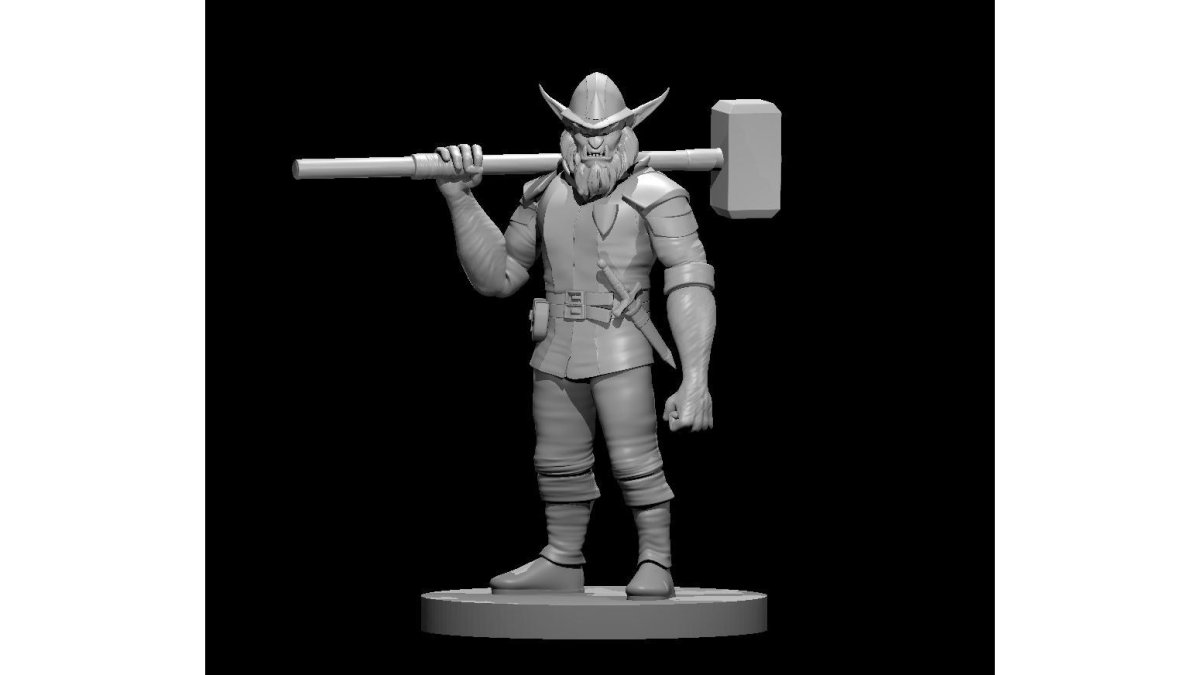
Custom miniatures give you options that mass-produced alternatives simply don't offer. You can source specific variants; a bugbear with an axe looks different from a bugbear city watchman, and both serve different narrative roles in your campaign. The Bugbear City Watchman miniature from Borishotch Industries (£4) is perfect for urban encounters, while the Bugbear with Axe (also £4) works better for wilderness threats.

The real advantage emerges when you're running a campaign with recurring enemies or specific thematic requirements. If your campaign features a particular monster type repeatedly, having multiple variants prevents the table from feeling repetitive. Three different bugbear miniatures create visual variety even though they're the same creature type.
D&D Monster Miniatures: Choosing the Right Creatures
Your monster selection shapes encounter difficulty and visual memorability. The creatures you place on the board tell players what to expect before combat even begins.
Small Humanoid Enemies
Small humanoids, goblins, kobolds, bugbears, cultists, form the backbone of most campaigns. These are your bread-and-butter encounter pieces, and you'll use them repeatedly. Stock several variants so encounters don't feel visually identical.
The Bugbear City Watchman (£4) works particularly well for urban or civilised encounters where enemies have some structure or discipline. This miniature signals to your players that they're facing organised opposition, not just random monsters. The Bugbear with Axe (£4) conveys a different threat, a savage warrior rather than an authority figure.

Having multiple variants of the same creature type is worth the investment. Five identical bugbears look repetitive. Three different bugbear miniatures with distinct poses or equipment create visual interest even though they're mechanically identical. Your players remember the encounter better when the visual presentation varies.
Large Predators and Dragons
Large creatures demand higher-quality miniatures because they're focal points of the encounter. A poorly-made dragon ruins the dramatic moment when it first appears. A well-crafted dragon piece becomes memorable.
The Behir miniature from Borishotch Industries (£10) is a serpentine predator that works as both a serious threat and a visually striking centrepiece. At this price point, you're getting detail that justifies the investment. The Behir's lightning breath weapon and scaled body are sculpted with clarity that cheaper alternatives lack.
Dragons and other large creatures occupy more table space, which means detail visibility matters more. Players are looking directly at these pieces for extended periods. Crisp details, clean paint surfaces, and stable bases become essential rather than nice-to-have features.
Dungeons and Dragons Miniatures →
The Bulette miniature (£7) represents a mid-tier creature that works as a serious encounter threat without being a full boss monster. This "land shark" creature serves well for wilderness campaigns where players need to face dangerous predators.
Painted D&D Miniatures vs Unpainted: What You Need to Know
The choice between painted and unpainted miniatures depends on your skill level, available time, and budget.
Unpainted miniatures cost less upfront because you're not paying for the labour of painting. They arrive as bare resin or plastic, ready for priming. If you enjoy painting as part of the hobby, unpainted pieces make sense. You get to customise colours and styles to match your campaign's aesthetic.
Painted miniatures cost more but save time. If you'd rather spend your prep hours on encounter design than painting, pre-painted figures are the practical choice. They're ready to use immediately.
The quality of painting varies significantly. A well-painted miniature looks professional and enhances immersion. Poorly-painted figures look worse than unpainted ones. If you're buying pre-painted pieces, examine the paint quality carefully. Sloppy brushwork is worse than bare resin.
Many experienced Dungeon Masters use a hybrid approach: buy painted pieces for creatures they'll use frequently, and buy unpainted figures for one-off encounters. This balances cost with convenience.
The miniatures from Borishotch Industries arrive unpainted and require priming before painting. This gives you control over the final appearance while keeping costs reasonable.
Pricing, Bulk Discounts, and Free Shipping
Understanding the pricing structure helps you build a collection efficiently.
Borishotch Industries offers automatic volume-based discounts on orders placed together. Spend £49 and you receive 5% off your entire order. Spend £99 and you get 10% off. Spend £149 and you receive 15% off. These discounts apply automatically at checkout, no codes needed.
Free postage applies to UK orders over £49. This threshold makes it practical to consolidate purchases. Rather than ordering a single £4 miniature and paying shipping, you can order several pieces together and qualify for free delivery.
The base pricing reflects the size and complexity of each piece:
- Small character miniatures: £3 each
- Medium creatures: £7 each
- Large creatures: £12 each
- Dragons and complex pieces: £15-£30
This tiered structure means your cost per piece varies based on what you're buying. A full campaign's worth of enemies might include dozens of small humanoids, several medium creatures, and a handful of large pieces. The volume discount applies across all of them.
Order Value |
Discount |
Free Shipping |
Practical Use |
|---|---|---|---|
Under £49 |
None |
No |
Single miniatures or small orders |
£49-£98 |
5% off |
Yes |
Building a starter collection |
£99-£148 |
10% off |
Yes |
Stocking an entire encounter set |
£149+ |
15% off |
Yes |
Campaign-wide collection expansion |
Planning your purchases around these thresholds makes financial sense. If you're at £45 and considering whether to order, adding one more £7 creature gets you to £52, triggering both the 5% discount and free shipping. That's a genuine saving.
Many Dungeon Masters stock up twice per year, once before a major campaign arc and once mid-campaign when they've identified gaps. This approach lets you hit the higher discount tiers while still having fresh pieces when you need them.
Building a D&D miniatures collection that actually enhances your game requires thinking beyond just "what creature do I need?" Quality matters because your players are looking at these pieces for hours. Scale consistency matters because it maintains immersion. And having visual variety matters because repeated encounters feel fresh when the miniatures look different.
Borishotch Industries stocks a focused range of carefully-crafted pieces designed to work together. Our 3D-printed miniatures maintain detail through repeated handling, stand reliably on the table, and paint cleanly. Start with the creatures your campaign needs most, use the volume discounts to expand strategically, and you'll build a collection that serves you for years of gaming.
Frequently Asked Questions
What scale are D&D miniatures?
Most D&D miniatures are cast at 28mm to 32mm scale, which represents a standard 6-foot humanoid character. This scale ensures compatibility with standard gaming grids and terrain. Larger creatures like dragons are scaled proportionally, so a dragon miniature will be noticeably taller than a human character. When selecting D&D miniatures, confirm the scale matches your existing collection and gaming table setup.
Can I use 3D-printed miniatures in D&D?
Yes, 3D-printed miniatures work perfectly in D&D campaigns. They offer excellent detail and customisation options at competitive prices. Quality 3D-printed pieces from specialist makers are durable, hold paint well, and integrate seamlessly with traditional miniatures. Many players prefer them for their unique designs and the ability to source creatures not available in official ranges. Just ensure they match your preferred scale before purchasing.
What should I look for when buying custom D&D miniatures?
When choosing custom D&D miniatures, prioritise detail quality, scale consistency with your existing pieces, and material durability. Consider whether you need painted or unpainted versions—unpainted pieces offer more customisation but require priming and painting. Verify that the seller offers the specific creatures your campaign needs.
Are D&D miniatures supplied painted?
Most 3D-printed D&D miniatures are supplied unpainted in resin. Unpainted miniatures require priming before you paint them, which gives you complete control over the appearance and colour scheme. Check the product description carefully to confirm whether your purchase includes paint or primer.