

Last Updated: November 7, 2026
Quick Summary
Buying professional 3D printed models saves the time, equipment outlay and failure risk of printing at home, while delivering a finished, consistent piece ready for the table or shelf. For small orders, buying often works out cheaper once the full cost of printers, consumables and your own time is counted. Quality can be judged on detail, surface finish, dimensional accuracy and durability.
- Home printing costs include the printer, wash and cure equipment, consumables, safety kit, electricity, failed prints and your time.
- Check faces and hands first, since soft detail on a 32mm figure shows a rushed or poorly set print.
- Most tabletop miniatures are sized for a 28mm to 32mm base, the standard for Dungeons & Dragons games.
- Orders over £50 qualify for 5% off and free UK postage, with 10% off over £100 and 15% off over £150.
Table of Contents
- What Professional 3D Printed Models Actually Offer
- 3D-Printed Miniatures vs Printing at Home: The Real Cost
- What 'Professional' Quality Means in Practice
- D&D Miniature Scale Guide: Choosing the Right Size
- How to Choose 3D-Printed Miniatures for Your Collection
- Licensing, Commercial Use and Safe Handling
- Choosing Your First Professionally Printed Piece
- Frequently Asked Questions
What Professional 3D Printed Models Actually Offer
If you have ever wanted a detailed fantasy miniature or a display piece without spending a weekend at a printer, buying a professionally printed model is the faster route. At Borishotch Industries, we make and sell detailed miniatures, busts and bespoke 3D printed artwork for tabletop gamers and home décor buyers across the UK.
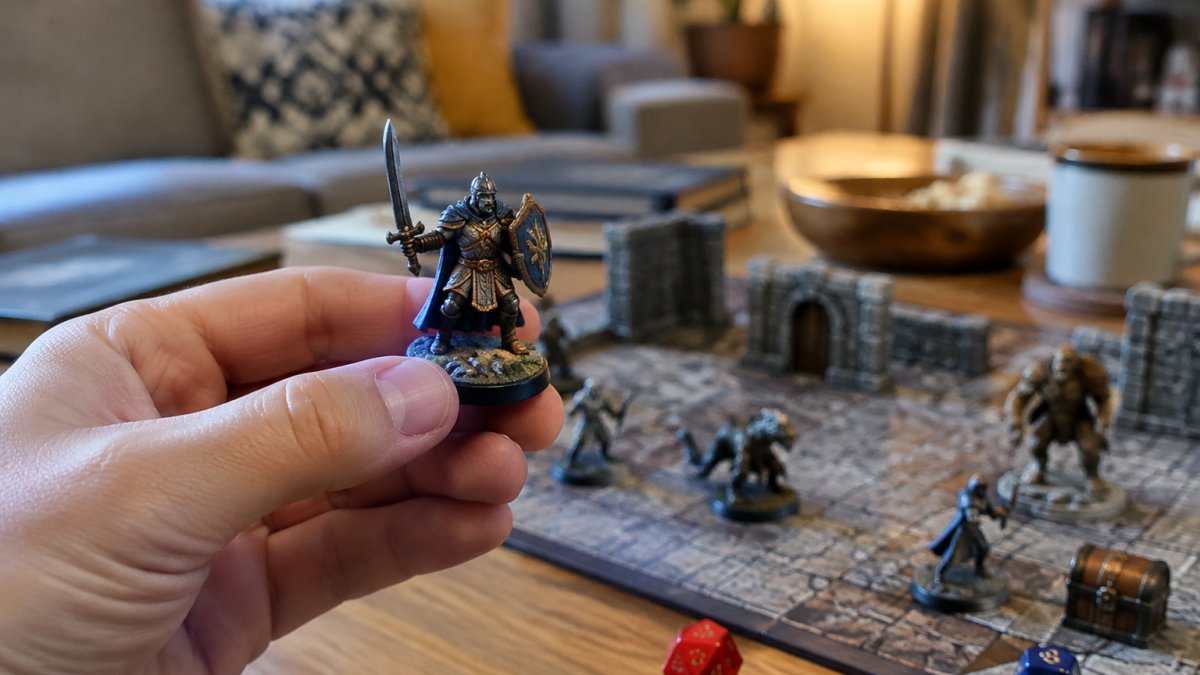
The core benefit is consistency. A professional print is finished, inspected and ready to use. You are not troubleshooting bed adhesion or waiting for a failed print to finish. You can see a finished example in our Giant Lizard miniature.
Our range shows what this looks like in practice. The Boxer Dog Bust is a 7cm miniature statue, 3D printed in black PLA and dry-brushed with gold gilding wax for an antique bronze effect, priced at £5.00 (product). If you want a finished piece for a fantasy game, the Dungeons & Dragons Assassin Male Miniature is a 32mm resin figure that comes ready to paint, at £4.00 (miniature).


3D-Printed Miniatures vs Printing at Home: The Real Cost
Printing at home can look cheap until you add everything up. The printer is only the first line of the bill. Resin or filament, wash and cure consumables, tools, electricity, failed prints and your own time all count towards the true cost per finished model. This section sets out a like-for-like comparison so you can judge the two routes on the same basis.
The full cost stack for home printing
A realistic home setup for detailed miniatures usually includes:
- The printer itself. A capable resin printer is the largest single outlay. Filament printers have a lower entry point but still need a reliable machine with a heated bed and regular maintenance.
- Wash and cure equipment. Resin prints must be washed in isopropyl alcohol and cured under UV light. Purpose-built stations cost extra; DIY alternatives save money but add handling time and mess.
- Consumables. Resin is sold by the bottle and has a shelf life once opened. Filament is sold by the spool and absorbs moisture if stored poorly. Both are ongoing costs that scale with every print.
- Tools and safety kit. Flush cutters, tweezers, a scraper, nitrile gloves, a respirator for resin work and a ventilated workspace are not optional extras if you want clean, safe results.
- Electricity. Every print, wash and cure cycle draws power. The amount per model is small, but it is not zero, and it adds up across a campaign.
- Failed prints and waste. A failed print at the end of a long run wastes resin or filament, machine time and your patience. A proportion of early prints can fail while settings are dialled in.
- Your time. Support removal, washing, curing, sanding and painting are all hands-on. Once you add finishing, a single figure can absorb an evening.
What that means per finished model
A common mistake is to compare the price of a bottle of resin with the price of a finished miniature. The fair comparison is cost per finished, ready-to-use model.
Run the numbers that way and the gap between home printing and buying narrows for small orders, where buying a finished model can come out ahead once your time is priced in.
Watch out: it is easy to forget the cost of the wash and cure station and the safety kit when comparing prices. Include them in your first-year total or the comparison flatters home printing.
Where buying wins and where printing can win
Buying a finished piece removes the equipment outlay, the consumable costs, the failure risk and the finishing time in one step.
Home printing can make sense if you already own the equipment for other projects, if you enjoy the making as a hobby in its own right, or if you need a very large number of identical pieces and have the time to run them.
The table below sets out the main cost elements of printing at home, so you can see what each one adds to the bill.
| Cost element | What it covers | Note |
|---|---|---|
| The printer | Largest single outlay | Filament printers have a lower entry point |
| Wash and cure equipment | Isopropyl wash and UV cure | Purpose-built stations cost extra |
| Consumables | Resin bottles or filament spools | Both are ongoing costs |
| Tools and safety kit | Cutters, gloves, respirator, ventilation | Not optional for clean, safe results |
| Electricity | Printing, washing and curing | Small per model, adds up over a campaign |
| Failed prints | Wasted resin or filament and machine time | Early prints can fail while settings are dialled in |
| Your time | Support removal, washing, curing, sanding, painting | Can absorb an evening per figure |
What 'Professional' Quality Means in Practice
"Professional" is a loose word, so it helps to be specific. In practice, a quality printed model should show clean surface detail, accurate proportions and a finish that holds up to handling.
The five criteria that matter
- Detail. Fine features such as scales, fur texture and facial expressions should read clearly, not blur into the surface. On a 32mm figure, the face and hands are the tell: if the eyes and fingers are soft, the print was rushed or the settings were wrong.
- Surface finish. The visible surface should be even, with no stray blobs, stringing or unfinished areas. On filament prints, some texture is normal; on resin prints, the surface should be smooth enough that paint sits flat.
- Dimensional accuracy. A 32mm figure should fit a 28mm to 32mm base without forcing, and parts that are meant to meet should meet. Warped bases and oval slots are signs of poor process control.
- Durability. A finished piece should survive normal handling. Resin figures can chip if dropped on a hard floor, so a professional seller will pack them to protect thin parts and will tell you which pieces are fragile.
- Consistency. If you order two of the same figure, they should match. Consistency is the hardest criterion for a home printer to hit and the easiest for a professional seller to demonstrate across a range.
A buyer's checklist
When you compare pieces, work through these questions:
- Are the finest features sharp? Look at faces, hands and any texture. Soft detail is the first thing to check.
- Is the surface clean? Check for support marks, nubs, stringing and unfinished areas.
- Does it sit flat? A base that rocks or a part that will not seat is a dimensional accuracy problem.
- Is the finish appropriate to the piece? A display bust may be hand-painted; a gaming miniature may be supplied ready to paint. Both are valid, but the listing should say which you are getting.
- Would two of them match? If consistency matters to you, ask or check reviews that mention repeat orders.
How our pieces illustrate the criteria
Our Boxer Dog Bust is a 7cm miniature statue, 3D printed in black PLA and dry-brushed with gold gilding wax for an antique bronze effect, priced at £5.00 (product).
Our Frostbite Shard Dice Tankard illustrates a different point. It is supplied unpainted in grey filament, so the quality you see is the print itself.
Watch out: photographs can flatter a print. If detail matters to you, ask for a close-up of the face or hands before ordering, or start with one piece to judge quality before committing to a larger order.
D&D Miniature Scale Guide: Choosing the Right Size
Scale matters more than most buyers expect. A miniature that looks right in a photo can look wrong on a battle map, and the wrong size can ruin a scene.
Most tabletop miniatures are sized for a 28mm to 32mm base, which is the standard for Dungeons & Dragons games.
Our 7cm Boxer Dog Bust is a different category altogether. It is a display statue, not a playing piece, and works best on a shelf, desk or mantelpiece.
How to Choose 3D-Printed Miniatures for Your Collection
Start with purpose. A piece for your campaign table needs a base size and a pose that suits play. A collector's piece can prioritise detail and finish over practicality.
Work through three questions before you buy:
- Where will it be used? Table, shelf or gift?
- Does it need painting? Some pieces arrive finished, others unpainted, such as our Frostbite Shard Dice Tankard in grey filament.
- How does it fit the collection? Consistent scale and style make a set look intentional.
For a collector building a themed set, a Hylaeosaurus Bookmark at £3.00 is a low-cost way to add a piece of 3D printed art with a dinosaur theme (bookmark). Pairing it with the Wolverhampton Wanderers Molineux Stadium Hueforge piece at £10.00 gives you a mix of decorative and personal items that do not require any printing or finishing on your part (Hueforge art).

Licensing, Commercial Use and Safe Handling
Before you buy a model to use or resell, check the licence. Several of our pieces, including the Assassin Male and the Frostbite Shard Dice Tankard, are supplied under a commercial licence. Read the listing terms carefully if you plan to sell prints or use a model in commercial work.
On handling, 3D printed pieces are generally lightweight and durable, but resin figures can chip if dropped on a hard floor. Keep smaller miniatures away from young children, and wash your hands after handling unpainted resin pieces.
Choosing Your First Professionally Printed Piece
If you are buying your first piece, pick something that matches how you will use it. A tabletop player should start with a 32mm figure that suits their campaign. A dog owner might start with the Boxer Dog Bust, which makes a thoughtful gift as well as a keepsake.
Our prices make it easy to start small. Buying one piece lets you judge quality before committing to a larger order.
To explore the full range, search our catalogue for the miniature, bust or artwork you have in mind.
Frequently Asked Questions
Are professionally 3D-printed models worth buying?
For most buyers, yes, particularly where the model needs to look finished on arrival. Buying a finished piece means you do not need to own a printer or manage the process yourself, and it avoids the failed prints that can waste material before a usable piece appears. Worth it for display pieces, gifts and one-off campaign needs; less so if you print in large volumes at home.
Is it better to buy 3D-printed miniatures or print them at home?
It depends on volume and patience. Printing at home suits people who enjoy the process and need many identical or customised pieces over time. Buying suits anyone who needs a few specific pieces quickly, or who wants a consistent finish without learning the craft. Factor in the printer, resin or filament, washing and curing equipment, electricity, and the time lost to failed prints. For occasional buyers, a single professionally printed piece often costs less than setting up a home workflow.
How do I choose the right scale for a tabletop miniature?
Check the scale stated in the product listing, typically 28mm or 32mm for standard D&D figures, and make sure every piece in a session uses the same scale. Monsters and large creatures are often sold at a different size, so compare them against a standard-scale figure before you order. Consider your battle map grid as well, since a figure that fills one square looks right, while a larger creature may take up several. Mixing scales within one encounter is the most common cause of a mismatched table.
What should I check before buying a 3D-printed miniature?
Look at the scale, material, whether the piece arrives unpainted or hand-finished, and the file licence if you plan to use it commercially. Check the listing for dimensions and be clear about what is included, such as a display plinth. Read the description for how the piece was made and whether it has been individually finished. Shipping costs matter too, so compare the total basket price for your order against the item price alone.
