Borishotch Industries
Ankylosaurus Bust
Ankylosaurus Bust
Couldn't load pickup availability
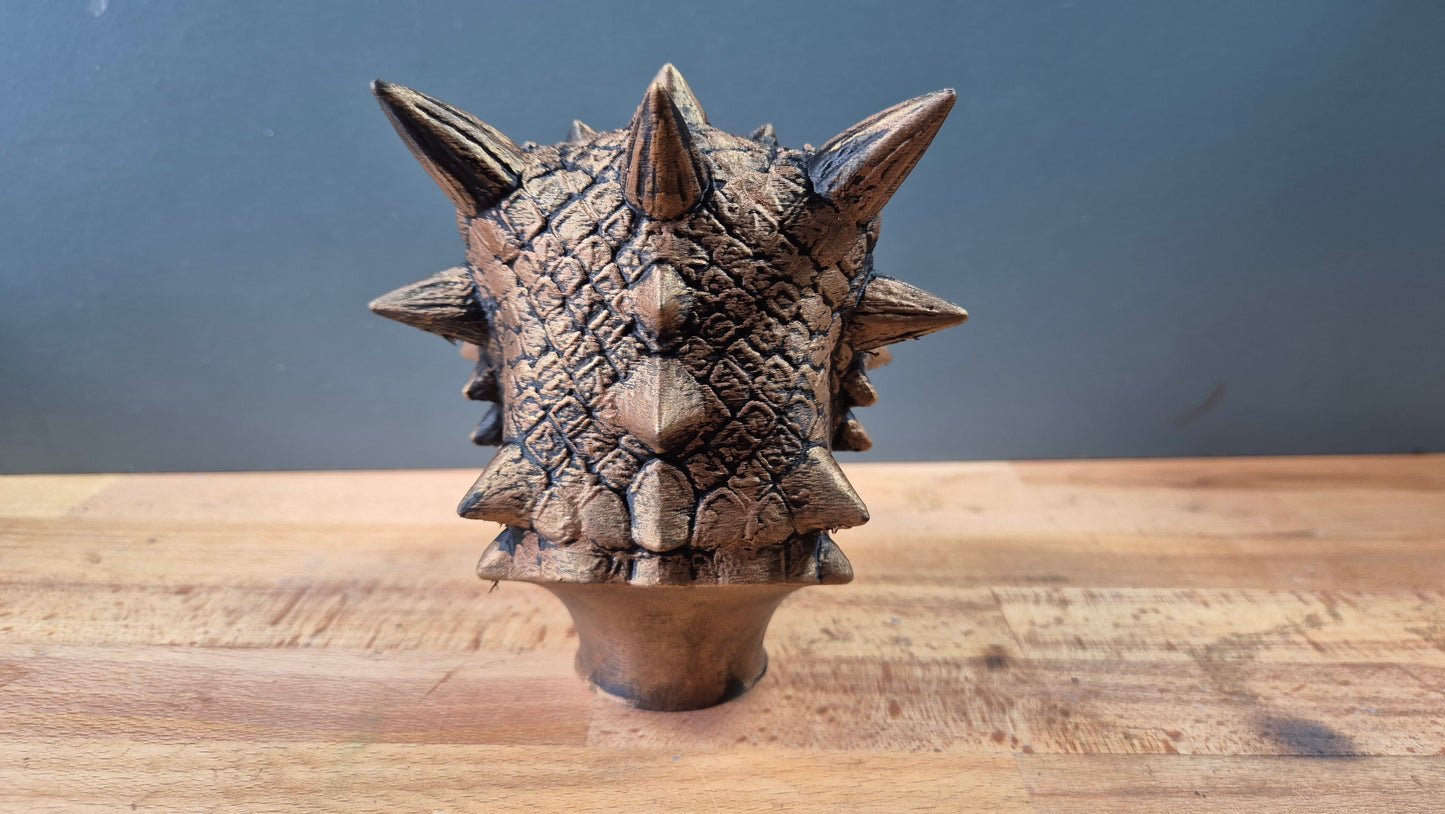
This is a highly detailed Ankylosaurus Bust.
This model was created by Mr Jay who makes amazing Busts and provided by Commercial License. https://makerworld.com/@Mr.Jay
This Bust is 3D Printed using Black PLA Filament and Dry-brushed with Gold Gilding Wax to give it a Bronze Statue effect.
This Bust is 15cm tall.
Ankylosaurus was a heavily armored dinosaur that lived during the Late Cretaceous period, around 68 to 66 million years ago, in what is now North America. Its name means “fused lizard,” referring to the way its bones were tightly joined together, especially in the skull and body armor. It was one of the last non-avian dinosaurs to exist before the mass extinction event that ended the age of dinosaurs.
Ankylosaurus was a large, quadrupedal herbivore, measuring up to about 6–8 meters (20–26 feet) in length and weighing several tons. Its body was low to the ground and broadly built, giving it a tank-like appearance. The most distinctive feature of Ankylosaurus was its extensive armor: bony plates called osteoderms were embedded in its skin, forming protective layers along its back and sides. Many of these plates were covered with keratin, making them even tougher. This armor not only deterred predators but also made the dinosaur incredibly resilient in combat.
The most famous feature of Ankylosaurus was its massive tail club. This structure was formed by two large, fused bony growths at the end of its tail, supported by powerful muscles. Scientists believe Ankylosaurus could swing this club with enough force to break the bones of large predators like Tyrannosaurus rex. The club was both a defensive weapon and possibly used in displays or combat with rivals.
Despite its intimidating defenses, Ankylosaurus was a peaceful plant-eater. It had a broad, beaked snout suited for cropping low-lying vegetation such as ferns, cycads, and angiosperms. Its small teeth were adapted for simple grinding, indicating it was not a selective feeder but instead grazed on a variety of plants.
In the fossil record, complete Ankylosaurus specimens are rare, so much of what is known comes from related species of ankylosaurs. Still, Ankylosaurus stands as one of the best-known examples of nature’s evolutionary “armor plating,” a dinosaur built for survival in a dangerous world.
Share