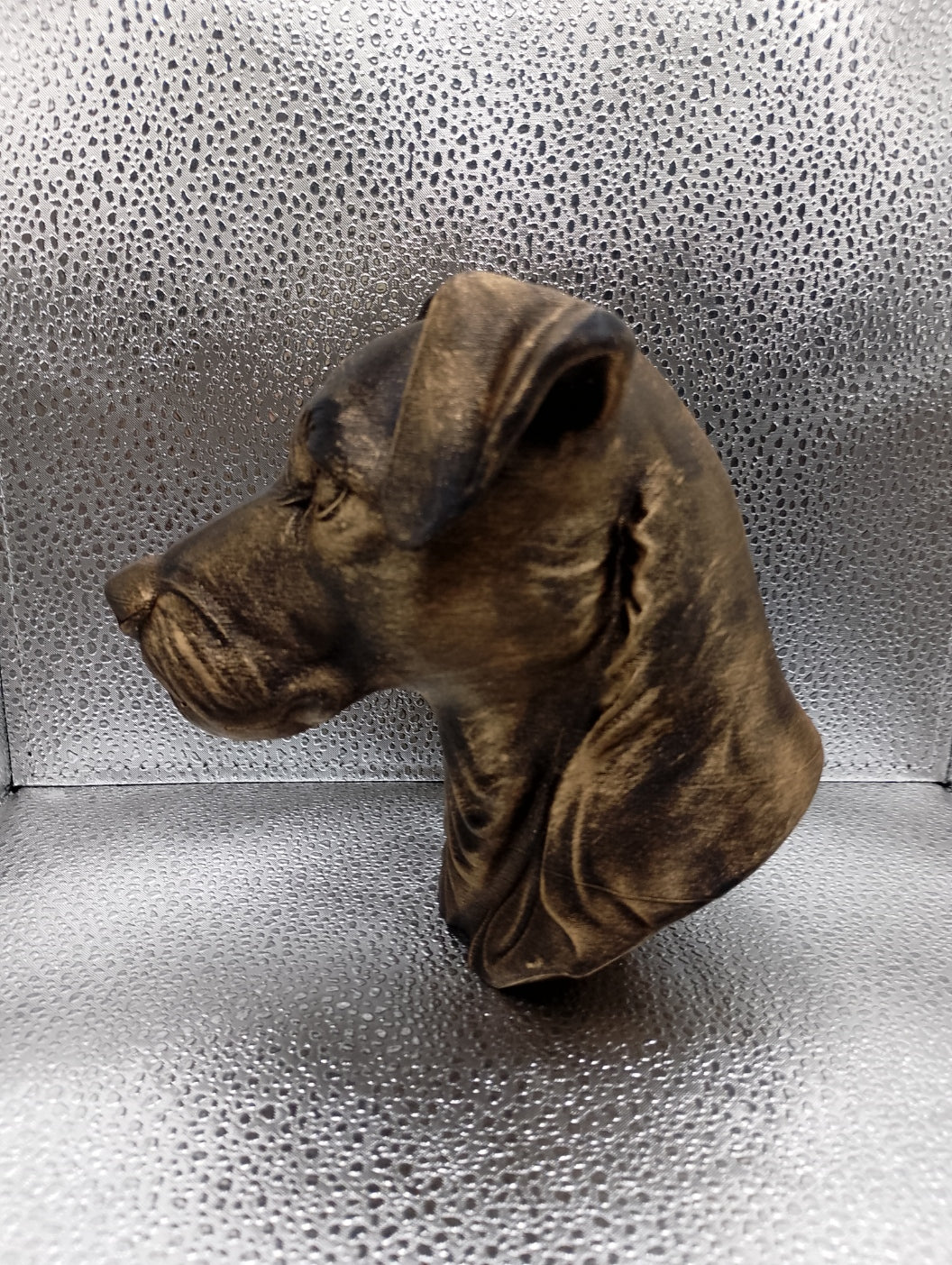
This is a highly detailed Parson Russell Terrier Bust.
This model was created by Mr Jay who makes amazing Busts and provided by Commercial License. https://makerworld.com/@Mr.Jay
This Bust is 3D Printed using Black PLA Filament and Dry-brushed with Gold Gilding Wax to give it a Bronze Statue effect.
This Bust is 15cm tall.
A Parson Russell Terrier is a small, energetic dog breed that originated in England, originally bred for fox hunting. Despite its similarities to the more widely known Jack Russell Terrier, the Parson Russell Terrier is a distinct breed, primarily recognized by its slightly longer legs and more square-shaped body. They were developed in the 19th century by Reverend John “Jack” Russell, who aimed to create a dog that could both chase foxes out of their dens and keep up with horses over rough terrain.
Parson Russells are compact, athletic dogs, typically weighing between 13–17 pounds (6–8 kg) and standing around 12–15 inches (30–38 cm) at the shoulder. They have a smooth, broken, or rough coat that is predominantly white with black, tan, or brown markings. Their ears are usually V-shaped and fold forward, giving them an alert and expressive appearance.
The breed is known for its intelligence, curiosity, and boundless energy. Parson Russells are extremely agile and thrive in environments where they can run, dig, and explore. They are also highly trainable but can be stubborn, requiring consistent, positive reinforcement. Socially, they are affectionate and loyal with their families but can be wary of strangers and may display a strong prey drive, making them prone to chasing small animals.
Because of their high energy levels and sharp minds, Parson Russell Terriers excel in dog sports like agility, flyball, and obedience competitions. They require both physical exercise and mental stimulation to prevent boredom, which can lead to destructive behavior. Despite their hunting origins, they adapt well to family life when given enough activity, structure, and attention.