

Table of Contents
- What Makes an Online Store Worth Buying D&D Minis From
- Our Shortlist: Borishotch Industries' D&D Miniature Range
- Understanding the D&D Miniature Scale Before You Order
- Single D&D Miniatures Versus Custom Orders
- Building a Monster Collection with D&D Monster Miniatures
- Price, Postage and Total Cost: What You Will Actually Pay
- Your Next Step: Choosing Minis for Your Next Session
- Frequently Asked Questions
Last Updated: November 1, 2026
What Makes an Online Store Worth Buying D&D Minis From
Finding the best online store for D&D minis comes down to three things: the range on offer, how the figures are described, and what you actually pay once postage is added. This guide from Borishotch Industries walks through what to check before you order, using our own catalogue as the working example. We set out where a store earns its place and where it tends to fall short.
A store worth buying from should describe each figure clearly, state its size and material, and price it transparently. Look for listings that say whether a miniature is unpainted resin and whether it needs priming. Check that the scale is given, usually 32mm for the figures in our range, so you know it will sit alongside your existing pieces.
Watch out: a low headline price can hide high postage (Providing clear and accurate information about prices: summary). Always compare the delivered total, not the item price alone.
Keep the following in mind as you read:
- Range: characters, monsters and dragons, all listed by name
- Description: size, material and finish stated plainly
- Price: each size band shown with its cost
- Delivery: postage rules set out before checkout
Our Shortlist: Borishotch Industries' D&D Miniature Range
This shortlist is built on four things a buyer can actually check before ordering: whether the range covers the figure types you need, whether each listing states scale, material and finish, whether the price is shown per piece, and whether postage and dispatch are clear before checkout.
Our own range is set out below against those criteria so you can judge it on the same terms as any other store.
| What to check | What our range offers |
|---|---|
| Range | Heroes, villains and monsters, all sold as individual pieces and listed by name |
| Description | Each listing states 32mm scale, resin material and unpainted finish |
| Price | Set by size band, so the cost is visible before you add to basket |
| Delivery | Postage rules set out before checkout |
Pricing by size band. Small characters start at £3, medium items are £7, large items are £12, and dragon-type figures run from £15 to £30. A party of four medium heroes, for example, sits at £28 before postage, while a single Ancient Black Dragon at the top of the range costs £30 on its own.
What is in the catalogue. Examples include a Minotaur Female Cleric, a Dragonborn Druid Leaning on Staff, a Halfling Female Druid Riding a Pig and a Barbarian with a Beer Barrel on his back. Each is a 32mm resin miniature. Creatures include the Bulette, Behir, Aboleth and Hydra.
Where the range stops. If you want a table-ready figure straight from the box, an unpainted resin range is not that; if you want to choose exactly which hero and which monster you field, and paint them to match your campaign, it is. If a figure you need is not listed, you can message us and we will try to source it.
Our browse the full D&D miniature range so you can see every figure in one place before choosing.

Understanding the D&D Miniature Scale Before You Order
Scale is the first thing to check, because mismatched figures look wrong side by side. The figures in our range are 32mm, which is a common size for D&D play. Mixing scales on one battle map can make a small character look larger than a dragon, so confirm the size in the listing before you buy.
Read the description for the material as well. Our figures are made from resin and sold unpainted, so they will need priming before you paint them. That is worth knowing if you are planning a set that needs to be ready for a session in a few days.
Our buyer's guide to D&D miniature quality and scale covers what to check before you order and how to match pieces to your table.
Single D&D Miniatures Versus Custom Orders
Buying single figures suits most players. You choose exactly the characters and creatures you need, and you pay only for those. A single hero or monster is a low-risk way to test a new style or fill a gap in your collection.
Custom orders make sense when the figure you need is not in the range. In that case, a reader can message us with the character or creature in mind, and we will try to find or make it. A custom request takes longer than buying off the shelf, so plan ahead if you need a piece for a particular session.
If you want a ready-made character to start with, our Minotaur Female Cleric miniature is a good example of what a single figure looks like in our range.
Dungeons and Dragons Miniatures →

When a Single Miniature Makes Sense
A single miniature is the better choice when you need one specific piece. It is also the right option when your table is small and you do not need a full set. Buy singles first to see how well the sculpt and size work for your game before committing to more.
When to Request a Custom D&D Miniature
Request a custom piece when a character or creature is missing from the catalogue and it matters to your campaign. Give as much detail as you can about the figure you want, so the request is easy to match.
Building a Monster Collection with D&D Monster Miniatures
Monster miniatures are where a collection starts to feel like a world. A single dragon or Hydra makes an impact at the table, but a set of creatures gives your encounters variety. Our range includes monsters from the Monster Manual, such as the Bulette, Behir, Aboleth and Hydra, which suit a wide spread of encounters.
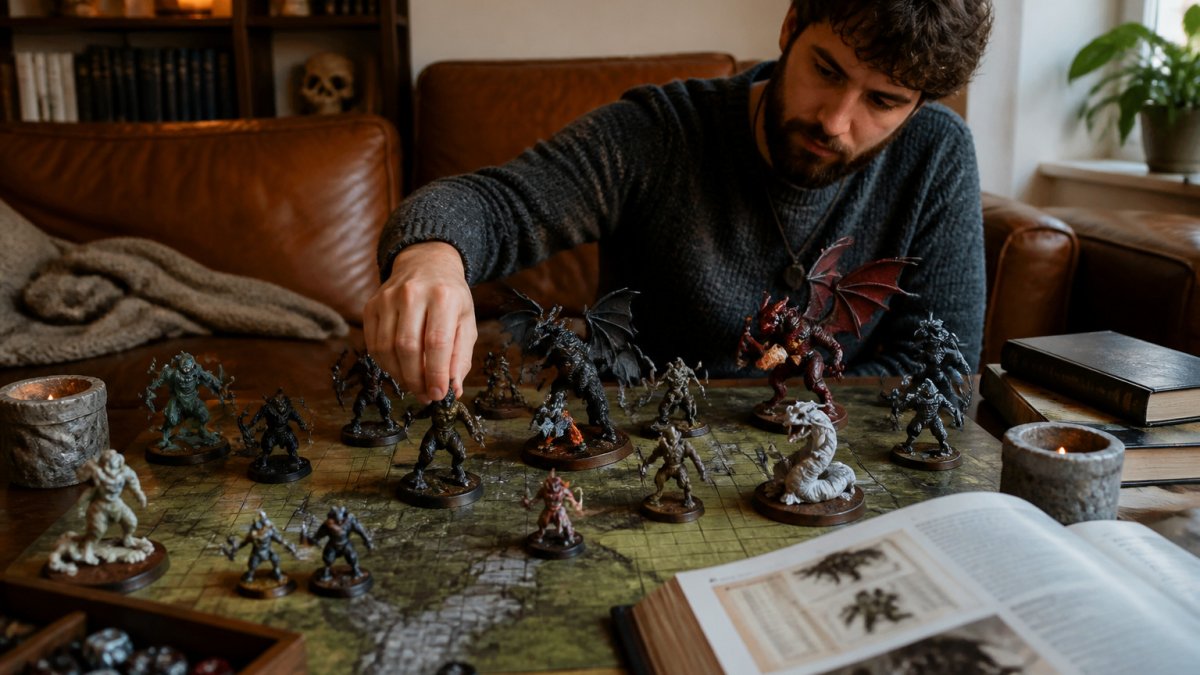
Dragons are the largest and most expensive pieces. Our Ancient Black Dragon sits in the £30 band, and the Hydra is also £30. Plan your budget around these high-impact pieces, and fill the rest of the table with smaller creatures and characters.
Our Ancient Black Dragon miniature is a strong centrepiece for a monster collection and a good anchor for a larger set.

Price, Postage and Total Cost: What You Will Actually Pay
Most buying guides quote the item price and stop. The number that matters is the delivered total: item price plus postage, plus any import charges if the stock ships from outside the UK. This section sets out how to work that out for any store, using our own size-band pricing as the worked example.
Step one: price the pieces, not the shop. Our figures are priced by size: small characters at £3, medium at £7, large at £12, and dragon-type items from £15 to £30. Write down the figures your next two or three sessions actually need, then total them. A typical starting order of one dragon centrepiece at £30, two large creatures at £12 each and four medium heroes at £7 each comes to £82 before postage.
Step two: add postage once, not per item. Postage is what changes the final total, so check the shipping rules before you check out. The practical question is whether a store charges per item or per order. If it charges per order, a larger basket spreads the postage across more figures and lowers the cost per piece; if it charges per item, a big order can quietly become expensive. Compare the delivered total for the same basket at two or three stores rather than comparing headline prices.
Step three: check where the stock ships from. Confirm the dispatch location before you order, especially if you need the figures for a session in the next week or two.
Step four: judge value per piece. Divide the delivered total by the number of figures. A single £3 small character posted on its own can cost more per piece than a mixed order of ten figures, because the postage is spread across the basket. That is the figure to compare across stores, not the shelf price.
For a clear view of the range and its pricing, our 3D art category shows what else is available and at what price point.
Your Next Step: Choosing Minis for Your Next Session
Start with the figure your next session needs most, then build out from there. Check the scale, confirm the material and priming needs, and add up the delivered total before you order.
Frequently Asked Questions
Where is the best place to buy D&D minis?
The best place depends on what you need. For a single named character or monster, a specialist shop with a large catalogue of individual figures is usually quicker than a general hobby retailer. Borishotch Industries sells D&D miniatures individually, with small characters from £3, medium items from £7, large items from £12 and dragon-type pieces from £15 to £30. Compare the total delivered cost, including postage on your order, before you choose, and check whether the listing states the material and whether the piece is primed or unpainted.
What is the best website to buy miniatures online?
A good website shows clear sizes, a readable description of each piece, a simple way to find a specific monster or character, and a visible postage policy. Borishotch Industries offers free postage on UK orders over £50 and automatic volume discounts of 5% off £50, 10% off £100 and 15% off £150. Use these thresholds to plan a larger order, such as a full encounter's worth of monsters, in one go rather than paying postage several times.
How do I choose the right scale for D&D miniatures?
Most listings for tabletop role-playing game figures give a scale, and the common size used in D&D play is 32mm. Stick to one scale across your whole collection so heroes and monsters look right side by side. Check the listing for the stated scale before ordering, and if you are unsure whether a piece will fit your existing set, message the seller first. Mixing scales is possible but usually looks uneven on a battle map.
Are custom 3D-printed D&D miniatures worth considering?
Custom 3D-printed pieces are worth considering when you need a creature or character that no standard range covers, such as a specific monster for a campaign. Borishotch Industries notes that if you cannot find the miniature you need, you can message the seller and they will try to find it. Ask about the material and whether the piece needs priming before you rely on it at the table.
